
“We use Excel and it works”
Ask how many callbacks promised last week were made on the day. Excel cannot ring at 3 pm; the reminder in the app does, with the remark from the first call.
NewRMDialer is now on iPhone as well as Android · every feature except the call log
White label telecalling CRM
A telecalling business does not buy a CRM for its pipeline charts. It buys it because telecallers waste the day typing numbers, forget callbacks and cannot be seen by the owner. Sell a telecalling CRM under your brand that fixes those three things on the phone they already carry.
Free personal dialer. Paid features include a 3-day trial; no card required.
Team plans: ₹159/user/month, billed yearly + taxes →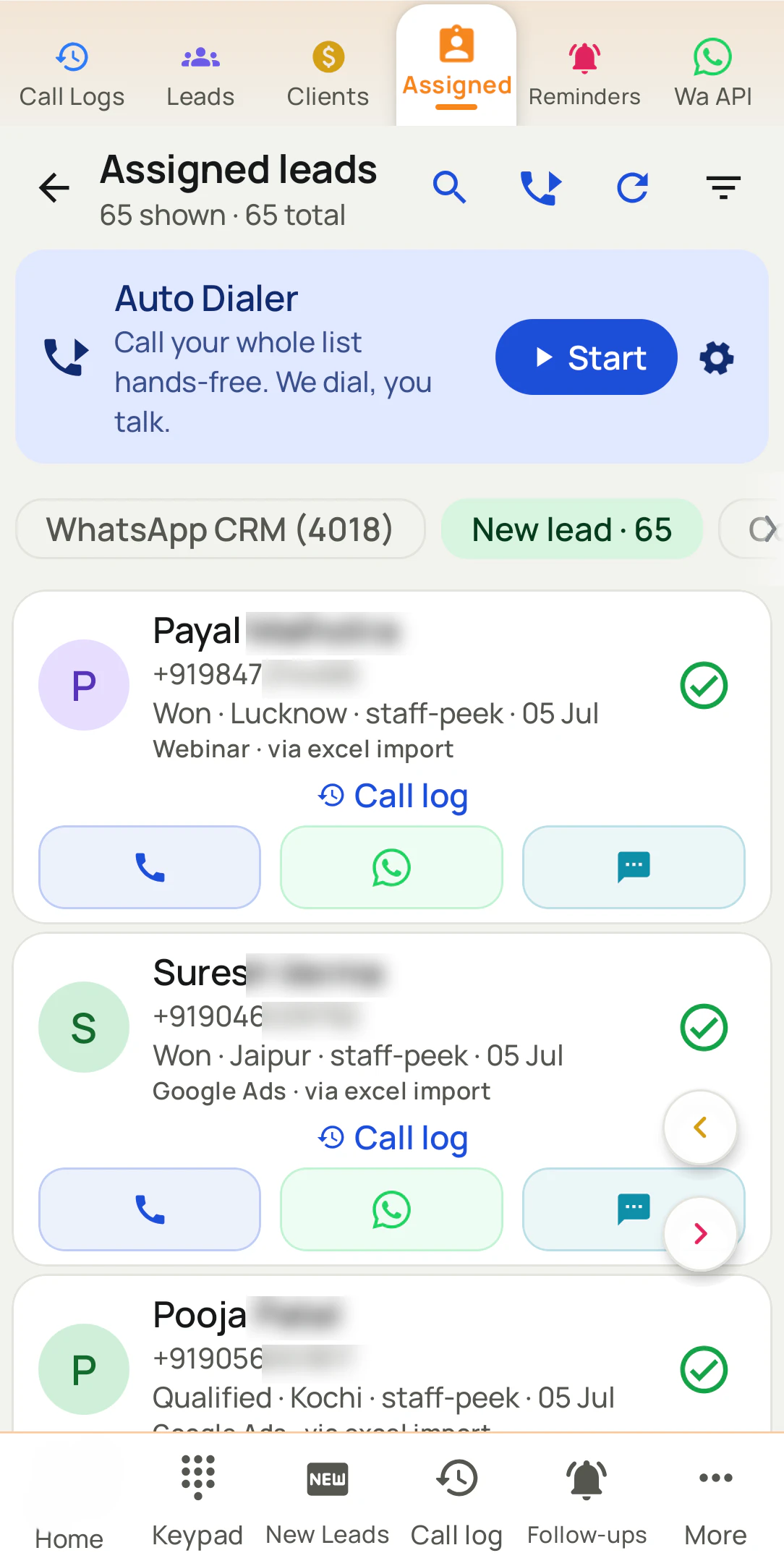
That daily use is what keeps your clients renewing.
Short answer
A white label telecalling CRM gives a partner’s clients an auto dialer on each telecaller’s lead list, one screen for the call outcome and next reminder, WhatsApp templates, attendance and a Web CRM where the owner reviews every telecaller, all under the partner’s brand. RMDialer runs this on Android phones with calls from each telecaller’s own SIM.
Key takeaways
From punch-in to the owner’s review
Walk a prospective client through this table and they recognise their own office in it. Each row is a moment where, without the app, time is lost or a lead is forgotten.
| Time | The telecaller | The branded app |
|---|---|---|
| 9:30 | Arrives and marks attendance | Punch in with a live selfie inside the office radius |
| 10:00 | Starts on the new leads | Auto Dialer rings the assigned list one after another |
| After each call | Notes the outcome | Status, remark and next reminder on one screen |
| 11:30 | Sends the price list someone asked for | Approved WhatsApp template from the lead |
| 15:00 | Works callbacks promised yesterday | Due reminders ring with the last remark |
| 17:30 | Tries the numbers that did not answer | Filter to not connected and dial again |
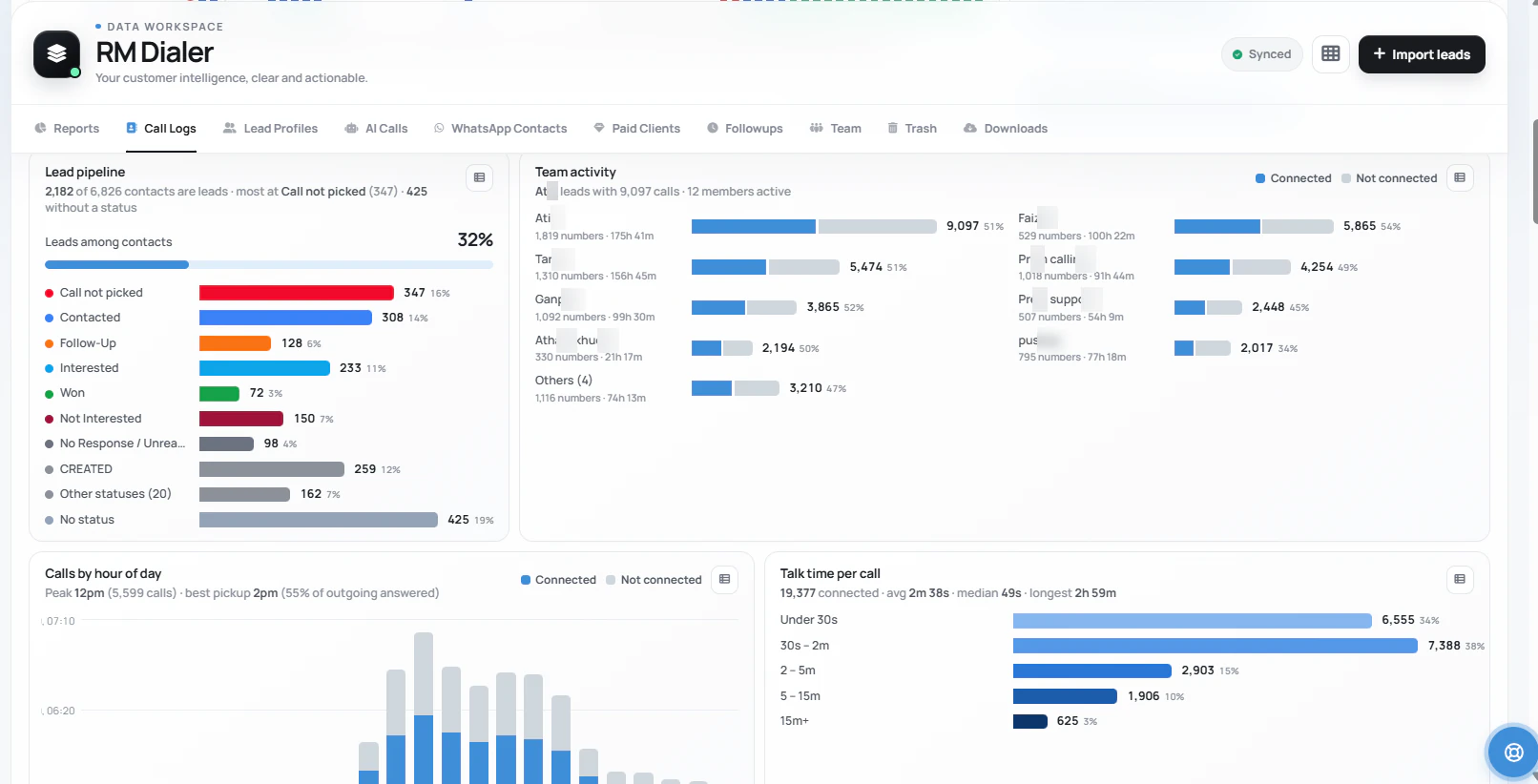
| 18:30 | Leaves; the owner checks the day | Team call logs and talk time on the Web CRM |
A mobile SIM distributor in Jabalpur
Picture a distributor in Jabalpur that supplies SIM cards and postpaid business plans to hundreds of shops, coaching institutes and travel agents across the Mahakoshal region. Its business customers already bought calling from it, and many had small telecalling teams on those very SIMs.
The distributor launched a telecalling CRM under its own name and offered it with every business plan of five SIMs or more. The pitch took a minute: your telecallers already call on our SIMs, now they can dial the whole list, note every outcome and never miss a callback, while you watch from a laptop. Coaching institutes were the fastest to buy, because admissions season lives or dies on callbacks.
The CRM made the distributor’s SIM plans harder to switch away from, as well as earning its own monthly fee. The distributor and its customers are an illustration of the model, not a named partner.
Three objections, three answers
Most telecalling owners believe their team is fine until they see the numbers. These are the three objections partners hear most, and what to show in reply.
Ask how many callbacks promised last week were made on the day. Excel cannot ring at 3 pm; the reminder in the app does, with the remark from the first call.
Show the Start button on the assigned list. The app dials; the telecaller talks and taps an outcome. It is simpler than dialing by hand, and it speaks their language.
So does every owner, until the first month of team call logs. Present it as proof for the good telecallers, not suspicion of the weak ones.
How the underlying app compares with other telecalling CRMs is covered on the best telecalling CRM software in India. For the broader range of white label options, see white label CRM.
After the sale
The first two weeks decide whether a telecalling client renews. A team that is left alone with a new app drifts back to the phone’s own dialer and a notebook within days, and the owner concludes the software did not work.
Run onboarding in three short sessions. On day one, install the branded app on every telecaller’s phone, import or connect the lead list and assign each person their share; let them start Auto Dialer before you leave, so the first calls happen with you in the room. On day three, sit with the team lead and read yesterday’s call logs together, fixing the two or three statuses people are using wrongly. At the end of week two, show the owner the Web CRM: calls per telecaller, callbacks kept and missed, and the leads still untouched.
That third session is the one that matters for you. An owner who has seen two weeks of their own team’s numbers under your brand rarely goes back to guessing, and usually asks what else you sell.
Try it with your own workflow
Share the kind of telecalling teams your customers run and your brand name. Partner terms and a demo account with a sample telecaller list come back on WhatsApp.
Team features, one plan
₹159/user/month
₹1,908 per user, billed yearly, plus taxes.
The personal dialer, call log and personal analytics are free forever. Team access and saved lead workflows require a plan. SIM charges and any WhatsApp provider charges are separate.
Compare free and paid features →A CRM made for telecallers, sold by a partner under the partner’s own brand. It combines a dialer, the lead list, call outcomes, follow-up reminders and reports for the owner, and the client only ever sees the partner’s name.
Any business where people call leads all day: education counselling, loans and insurance, real estate, travel, coaching institutes, B2B distributors and outsourced calling teams. Partners usually start with the trades they already know.
No. The whole telecalling day runs on an Android phone: dialing, notes, reminders and WhatsApp. Owners and team leads use the Web CRM on a laptop for reports and lead distribution.
Yes. Telecallers can start Auto Dialer on their assigned list and the app rings one lead after another, pausing after each call for the outcome, so there is no time lost typing numbers.
Yes. The Web CRM shows calls, connected calls, talk time and follow-ups for each telecaller, under your brand, so the owner reviews the team without asking anyone for a report.
Yes. Telecallers punch in and out in the same app with a live selfie, checked against the office location, so late starts show up next to a quiet morning of calls.
The owner can assign leads by hand, or let new leads from a connected sheet or webhook be shared in turn between the telecallers they choose. Each telecaller sees only their own list on the phone.
No calling charges come from the CRM. Calls go through each telecaller’s own SIM plan, which in India is usually an unlimited calling pack the business already pays for.
Usually the same day the app is installed: import or connect the lead list, add the telecallers and assign leads. Most teams need one short training call on statuses and reminders.
Yes. Vendors running calling for several clients can keep each client’s leads in separate lists and report per client, which suits small outsourcing teams that do not want a full call-centre system.
Habit and visibility. Once telecallers’ reminders and lead history live in the app and the owner reads the team from the Web CRM each evening, switching away means losing both, so renewals follow naturally.