Mostly outbound?
Teams that call leads, customers or renewals, rather than waiting for callers, fit the SIM model. Big inbound support desks do not.
NewRMDialer is now on iPhone as well as Android · every feature except the call log
White label call center software
Most white label call centre products are cloud platforms: virtual numbers, headsets, per-minute bills and IVR. They are right for big inbound floors and wrong for the thousands of ten-person outbound teams working from mobile phones. RMDialer is built for that second group, and partners sell it under their own name.
Free personal dialer. Paid features include a 3-day trial; no card required.
Team plans: ₹159/user/month, billed yearly + taxes →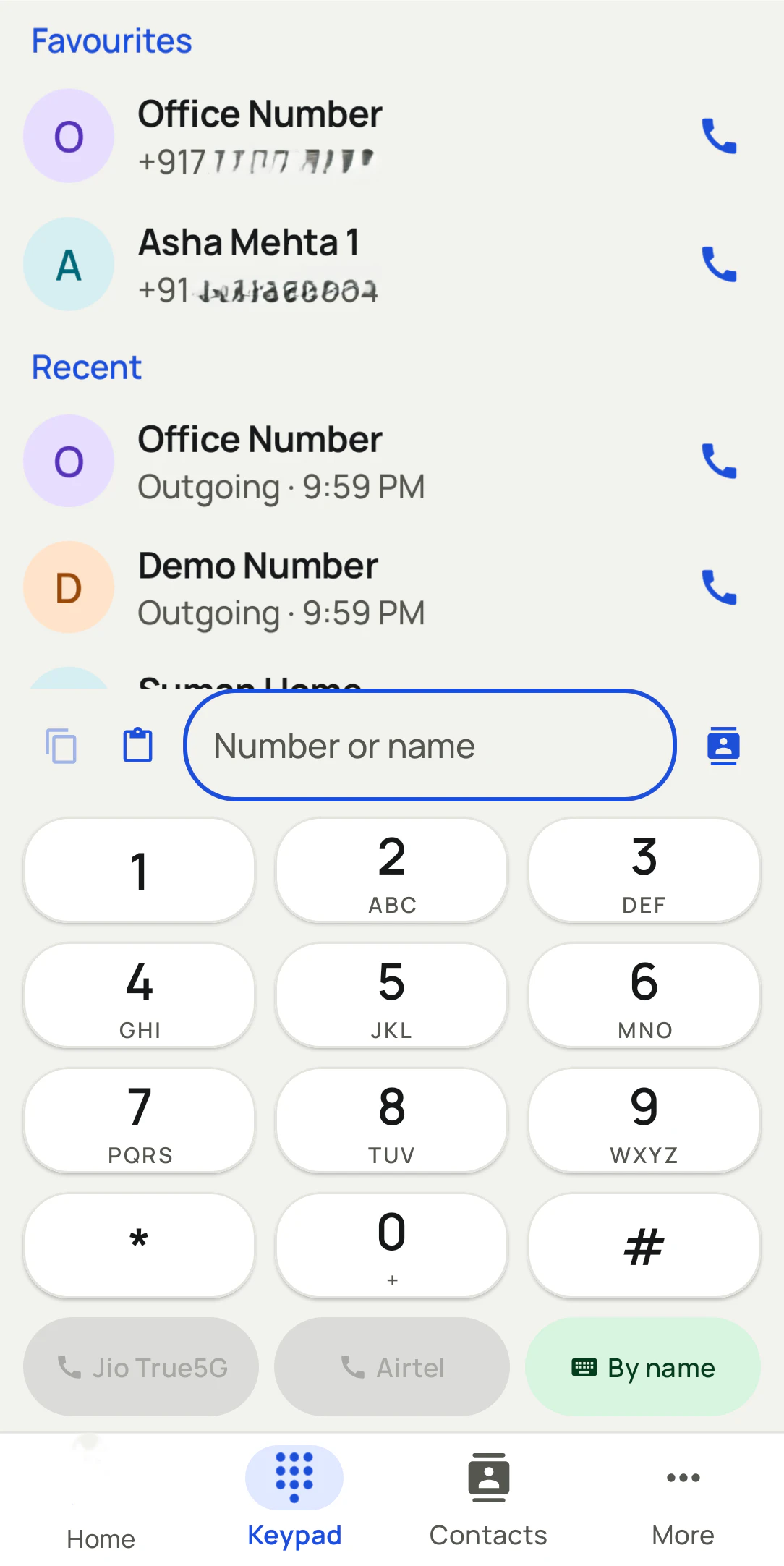
The phone and the SIM plan are already paid for.
Short answer
Cloud call center software runs calls over the internet through virtual numbers, with IVR, queues, predictive dialing and per-minute billing. SIM-based call center software such as RMDialer runs calls through each agent’s own mobile SIM, with an auto dialer, team call logs and attendance, and no calling charges beyond the SIM plan. Cloud suits large inbound floors; SIM suits small outbound teams.
Key takeaways
Same words, different products
Partners who confuse the two sell the wrong product to half their clients. Use this table in the first meeting, before any demo, to decide which one the client actually needs. A hospital appointment desk taking hundreds of incoming calls an hour needs routing; a loan team ringing yesterday’s applicants does not.
| Need | Cloud or VoIP platform | SIM-based (RMDialer) |
|---|---|---|
| Numbers customers see | Virtual or toll-free numbers from the platform | Each agent’s own mobile number |
| Cost of calling | Per minute or per channel, billed monthly | The SIM plans the business already pays |
| Inbound calls | IVR menus, queues and routing to free agents | Ring the agent’s phone directly; no queue |
| Outbound dialing | Power, predictive or preview dialers over the internet | Auto dialer, one call at a time from the phone |
| Where agents sit | Desks with headsets and a browser | Anywhere with a phone: office, home or field |
| Call recording | Every call, on the platform | Where the phone itself records, attached to the call |
| Best for | Large inbound or high-volume outbound floors | Small and mid outbound teams, 2 to 50 people |
A call centre setup consultant in Ranchi
Picture a consultant in Ranchi who helps businesses across Jharkhand set up calling teams: an education group enrolling students, a two-wheeler finance company collecting instalments, a hospital chain booking health checks. Each wanted a call centre; none wanted to rent channels, buy headsets or pay per minute.
The consultant launched SIM-based call centre software under their own brand. A new client’s team is usually calling on the day of setup, from phones and SIMs they already own, and the owner reads the whole floor on the Web CRM that evening. When a larger client needed an IVR for inbound complaints, the consultant said so plainly and set up a cloud line for that one job, keeping the outbound team on the branded app.
That honesty is why clients refer the consultant to others. The consultant and his clients are an illustration of the model, not a named partner.
Qualify before you demo
Four questions sort most prospects in five minutes. If the answers are yes, the SIM model is the better and cheaper choice; if they are no, point the client to a cloud platform and keep their trust.
Teams that call leads, customers or renewals, rather than waiting for callers, fit the SIM model. Big inbound support desks do not.
Small and mid teams gain the most from skipping telephony setup. Very large floors usually need routing and dialing that cloud provides.
Businesses with unlimited calling packs save the per-minute bill entirely, which is often the deciding number for the owner.
Teams that work from home, in the field or in small offices without desks and headsets fit a phone app naturally.
The product behind this page is described in depth on SIM-based call center software. Partners whose clients call leads all day can also read white label telecalling CRM.
Your margin, their savings
A cloud call centre bill has three parts the client feels every month: seats, channels and minutes. The minutes are the part that frightens small owners, because a busy month costs more exactly when cash is tight. The SIM model removes that line entirely; the only calling cost is the mobile plan the business already pays.
That gap is your room to price. Charge per agent per month for the branded software, set below what the client would pay a cloud platform for seats and minutes together, and still keep a healthy margin over your platform cost. Clients compare the two totals, not the feature lists.
Setup is the second source of income. Many partners charge once for installing the app on every phone, importing the first lists, setting statuses and training the team lead. It is a day’s work that clients happily pay for, because it gets their team calling immediately.
Seats, channels and per-minute calling, every month.
Your per-agent price, and SIM plans they already have.
A one-time fee to get the team calling on day one.
Try it with your own workflow
Describe the calling teams you set up, their size and whether they are inbound or outbound. We reply with partner terms, and tell you honestly if cloud fits your clients better.
Team features, one plan
₹159/user/month
₹1,908 per user, billed yearly, plus taxes.
The personal dialer, call log and personal analytics are free forever. Team access and saved lead workflows require a plan. SIM charges and any WhatsApp provider charges are separate.
Compare free and paid features →Call centre software a partner sells under their own brand. Most products under this name are cloud or VoIP platforms with virtual numbers and per-minute billing; RMDialer is the other kind, a call centre app that runs on agents’ own mobile phones and SIM cards.
No. It has no IVR, no inbound queue and no predictive dialer. It is a SIM-based calling app with an auto dialer, leads, reminders, attendance and team reports, which suits outbound teams that call from mobile phones.
Businesses with small outbound teams that already have unlimited calling SIMs, want customers to see a normal mobile number, and do not need inbound routing. Education, loans, insurance, real estate and B2B sales teams are typical.
Yes. Because calls go from each agent’s own phone, an agent at home works exactly as one in the office, and the manager sees both in the same team call logs on the Web CRM.
Selling the software does not make you a telecom operator, because the calls run over your clients’ own mobile plans. Your clients must still follow calling rules such as consent and TRAI’s rules on promotional calls.
Incoming calls ring the agent’s phone as normal and are logged against the lead, with an automatic WhatsApp possible after a missed call. There is no queue that moves a caller to the next free agent; that needs a cloud platform.
Where the handset’s own dialer records calls, the recording can be attached to the call in the app. Recording coverage depends on the phone model, so check it on the handsets your clients use before promising it.
There is no fixed ceiling in the app, but the model fits teams from two to about fifty best. Beyond that, clients usually need inbound routing or predictive dialing that a cloud platform provides.
Yes, and some partners do: a cloud platform for large inbound clients, and a branded SIM-based app for the many small outbound teams where cloud is too costly or complex. Being clear which fits builds trust with both.
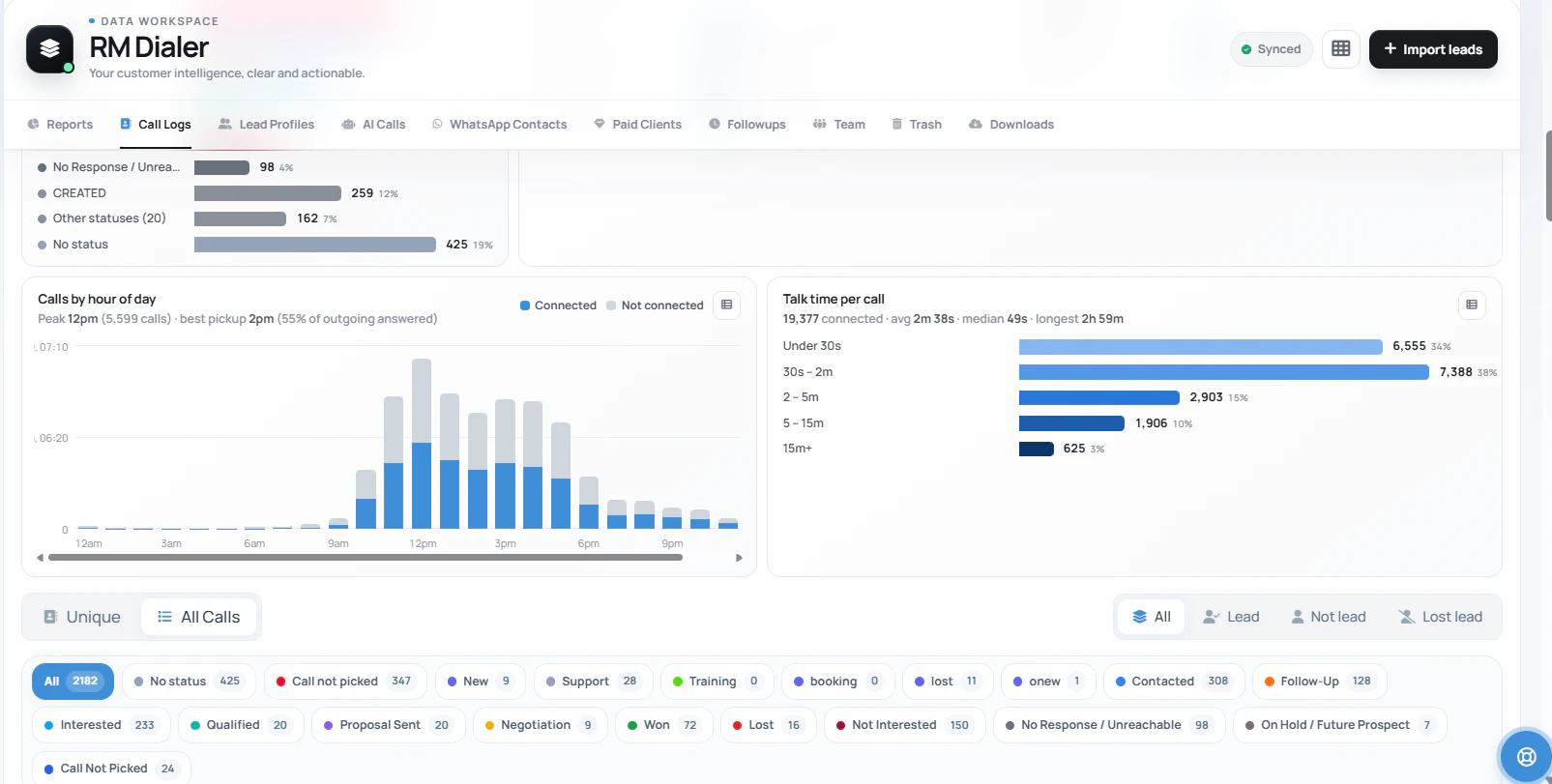
Calls, connected calls and talk time per agent, calls by hour and follow-ups due, all on the Web CRM under your brand. Agents also punch in and out on their phones with a selfie and location check.
Once phones and SIMs are in hand, usually within a day: install the branded app, add agents, import the lead list and assign it. There is no telephony provisioning or number porting to wait for.