White label software business from the operator’s chair.
A white label software business sells someone else’s software under its own name. It sounds like reselling, and the first sale feels like it, but the business is really a subscription book you look after month after month. Here is how the work splits, where the income comes from and what decides whether it lasts.
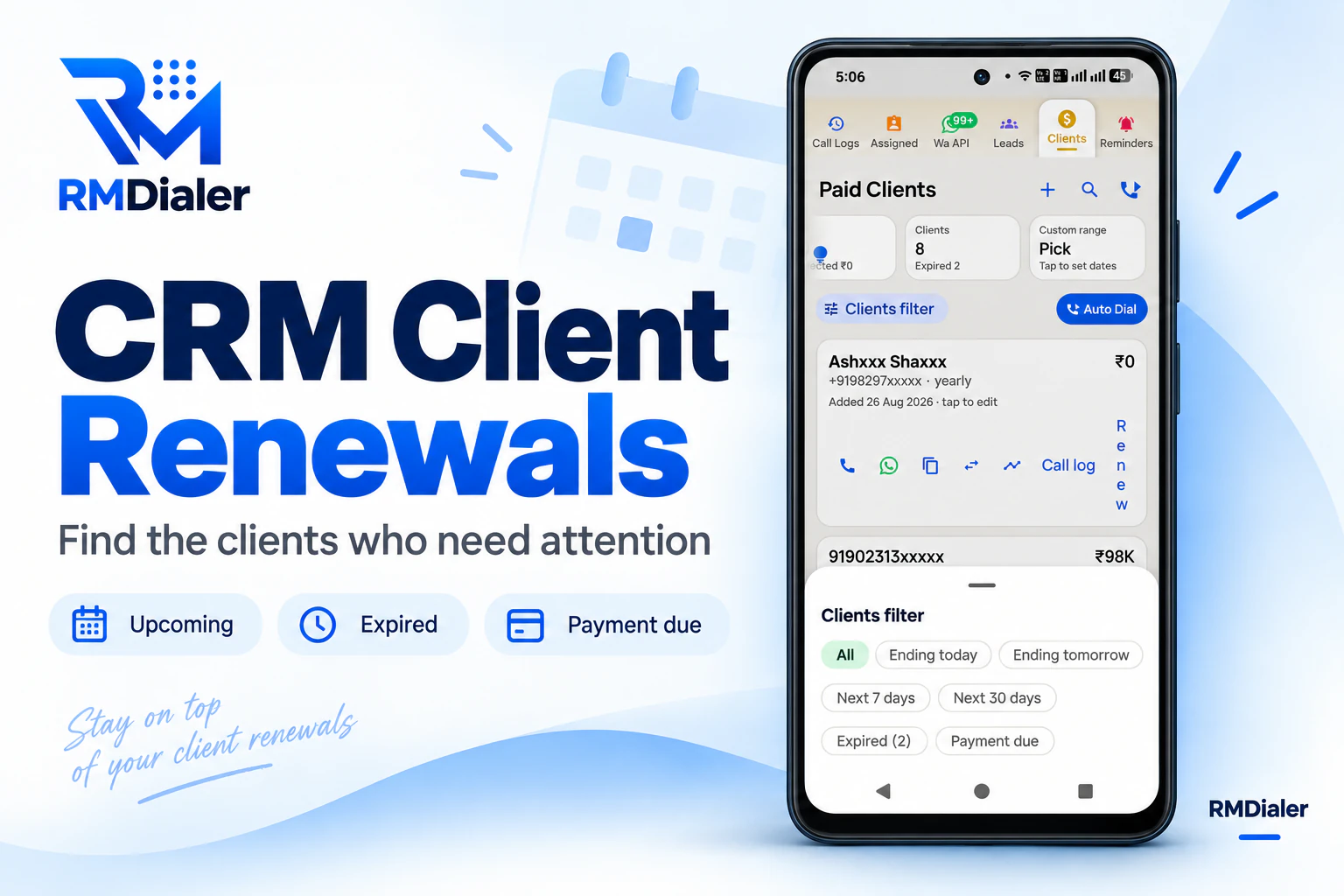
A software business lives on this list: who renews this week, who has lapsed, who still owes. View full size ↗
A subscription book, not a shop.
Each month starts with last month’s clients.
Short answer
How does a white label software business work?
A white label software business sells a finished product made by a software company under its own brand: the maker writes, hosts and updates the software, while the business chooses the name, wins clients, sets prices, trains users and handles first-line support. Income arrives as subscriptions, so renewals matter more than first sales. RMDialer runs this model with 500+ partners.
Key takeaways
The maker handles code and servers; you handle clients.
Renewals, not first sales, decide the income.
Support hours per client decide the margin.
The word itself
White label meaning in business
The phrase comes from packaging. A factory fills plain, white-labelled jars, and each shop prints its own label on them. Your local chemist’s own-brand paracetamol and a supermarket’s house-brand rice are white label goods: one maker, many names on the shelf.
Software works the same way with one difference that changes everything about the business. A jar of rice is sold once. Software keeps running after the sale, on servers somebody pays for, on phones that update every year, for clients who will ring with questions. So a white label software business is not a trading business with a margin on each box. It is a service business wrapped around a product, and its value is the list of clients who keep paying.
That is also why the Reddit question “why don’t more people run a white label software business?” gets the answers it does: the selling looks easy, and the looking-after is what most people did not plan for.
Maker and partner
White label software business roles
Every partnership draws this line somewhere. This is where it sits with RMDialer: the maker owns everything technical, the partner owns everything human. Get the equivalent table in writing from any maker you consider.
Which jobs the software maker does and which the white label partner does, with notes.
Job
Maker
You, the partner
Note
Writing and fixing the software
Yes
No
Bugs, new Android versions, new features
Servers, backups and uptime
Yes
No
Your clients never see who hosts it
Brand name, logo and colours
Applies them
Chooses them
On the app and the Web CRM
Play Store listing
Builds the app
Owns the listing
Published on your own Play account
Finding and closing clients
No
Yes
Your network, your price
Setup and training
Helps you learn it
Does it for clients
In the client’s language and hours
First-line support
Second line
First line
Clients call you, you escalate faults
Billing and renewals
Bills you
Bills your clients
Your margin is the gap
Read the last row twice. The maker bills you; you bill your clients. Your margin is the gap between the two, minus the hours you spend training and answering. A partner who charges a little less but answers on WhatsApp within the hour usually keeps clients longer than one who charges a little more and calls back tomorrow.
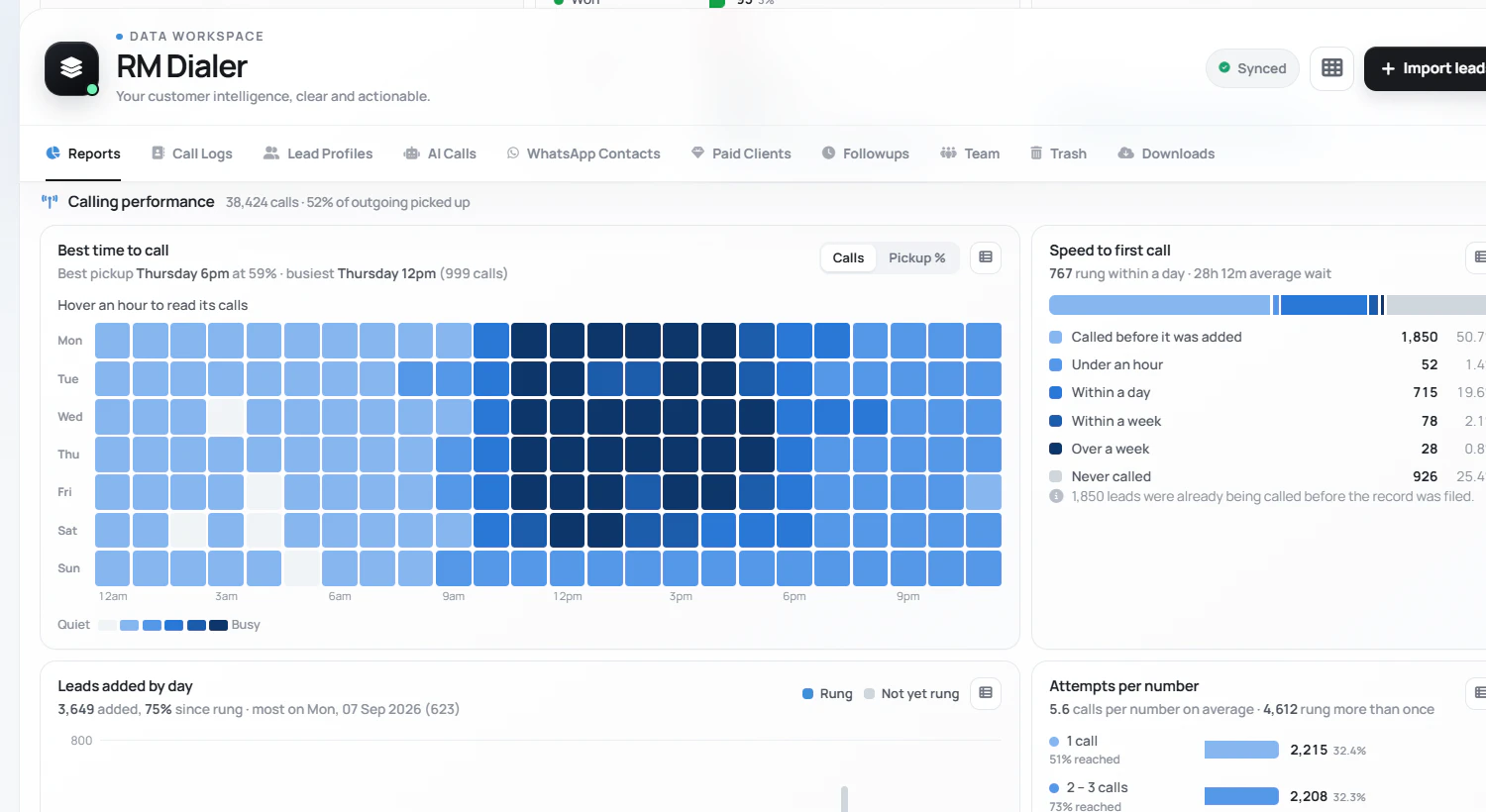
What your client sees every morning carries your name, not the maker’s. View full size ↗
Where the money comes from
White label software business income
Three streams, in order of how much they matter after the first year.
Renewals
The client pays again every month or year without being sold to. This is the stream that turns a hustle into a business, and it grows only if clients use the product daily. A calling CRM that a sales team opens all day renews far more reliably than a tool someone remembers once a fortnight.
New seats in old clients
A shop that starts with two telecallers hires a third. Each new user on an existing account is income with almost no selling cost, so pick software priced per user and watch which clients are growing.
Setup and training
Many partners charge once for importing leads, configuring statuses and training the team in person. It pays for the first visit and sets the tone: clients who are trained well complain less and renew more.
A mobile shop chain in Jodhpur
White label software business started beside an existing shop
Picture the owner of three mobile phone shops in Jodhpur. He already sells handsets, SIM cards and recharges to hundreds of small businesses: coaching centres, property dealers, tour operators, wholesalers on the old city lanes. Every one of them complains about the same thing at the counter: staff do not call leads back.
He launches a calling CRM under his shops’ name, on his own Play listing, and offers it to customers he already serves. His nephew handles setup in Hindi and Marwari on Saturdays. The first few months bring a handful of accounts. By the end of the first year the renewal list on his own phone pays the rent of one shop, and the clients who grew have added users without being asked.
What made it work was not the software alone. It was trust he had built across a counter for years, and a product his clients opened every working hour. He is an illustration of the pattern, not a named partner.
Buying instead of starting
White label software business for sale
Running white label businesses do change hands, usually when the founder moves on. The price is normally a multiple of the yearly renewal income, so everything depends on whether that income is real and transferable. Four checks before any money moves:
The listing and domain move to you
The Play Store listing, the web address and the brand name must transfer into your name. A business whose app sits on the seller’s personal developer account is not yet yours.
Contracts name the business
Clients should have signed with the brand or the firm, not with the founder personally. Otherwise the clients may simply follow the person who leaves.
The maker agrees
Ask the software maker in writing whether it will continue the partner terms with a new owner, and on what conditions. Without that, you are buying a brand that can go dark.
Month-by-month renewals
Look at renewals per month for two years, not a single total. A business that lost a third of its clients last quarter is priced on a number that no longer exists.
Most failed partners hit one of three walls. The first is choosing a product nobody uses daily, so clients quietly cancel at renewal. The second is underpricing to win the first sales and then finding that training and support eat the whole margin. The third is depending on a maker that cannot keep up: an Android update breaks calling, a policy change pulls a permission, and every client blames your name.
The defence against the third is evidence. Ask any maker for live partner apps you can install today, for how long it has operated and in how many countries. RMDialer has been built since 2020 by Wappblaster in Bikaner, and its partner programme counts 500+ partners across 12+ countries, each selling the full app under its own brand on its own Play listing.
Try it with your own workflow
Start a software business on a product clients open all day
Tell us your town, what you sell today and to whom. We reply on WhatsApp with the partner routes, your own brand or ours, and the terms that fit.
The personal dialer, call log and personal analytics are free forever. Team access and saved lead workflows require a plan. SIM charges and any WhatsApp provider charges are separate.
A business that sells software made by another company under its own brand. The maker writes, hosts and updates the product; the white label business picks the name, finds clients, sets the price, trains users and answers their first questions, and earns the difference between what clients pay and what the maker charges.
What does white label mean in business?
A white label product is made by one company and sold by another under the seller’s brand, like a supermarket’s own-brand biscuits made in someone else’s factory. In software it means the app, the website login and the invoices carry your name while the code runs on the maker’s servers.
Is a white label software business profitable?
It can be, because each client pays every month or year while your cost per extra client is small. Profit depends on two numbers more than any other: how many clients renew, and how many support hours each one takes. A product people use all day scores well on both.
How much money do I need to start a white label software business?
Far less than building software: no developers and no servers. You pay the maker’s partner terms, a Google Play developer account for your own listing, and your own time to sell and train. RMDialer shares partner terms on WhatsApp case by case rather than publishing one price.
Can I buy a white label software business for sale instead of starting one?
You can, but check four things before paying: that the Play listing and domain transfer to you, that client contracts name the business rather than the seller, that the maker will continue the partner agreement with a new owner, and the real renewal history month by month.
Who owns the clients in a white label software business?
You do. They signed with your brand, pay you and call you. The maker only sees the accounts as data it hosts. Put that in writing in the partner agreement, along with what happens to client data if either side ends the arrangement.
Do I need a company registration to run a white label software business in India?
Selling software subscriptions as a business usually means invoicing clients, so most partners work through a registered firm with tax registration in place. Ask your own accountant what applies to your turnover; the software side does not change it.
What is the biggest risk in a white label software business?
Depending on one maker. If its product falls behind or its policies change, every client feels it under your name. Reduce the risk by choosing a maker with live partner apps you can install, years of operation and clients in more than one country.
How many clients does a white label software business need?
Enough that monthly renewals cover your fixed costs before any new sale. Work it out from your own price and the maker’s terms; the point where renewals alone pay the bills is the point where the business stops depending on this month’s selling.
Can a white label software business run from a small town?
Yes. The software is delivered online, so the business needs a phone, a laptop and local trust. Small-town partners often do well because they know every shop owner by name and can train in the local language face to face.