Brand
App name, icon, colours and store listing on your account; your name on the Web CRM your clients log into.
NewRMDialer is now on iPhone as well as Android · every feature except the call log
Create your own CRM app
There are two very different reasons to want your own CRM app. One is to run your business your way. The other is to sell a CRM under your own name. The first can suit a no-code or AI builder. The second almost never does, because clients expect a real phone app that dials, and that is years of engineering.
Free personal dialer. Paid features include a 3-day trial; no card required.
Team plans: ₹159/user/month, billed yearly + taxes →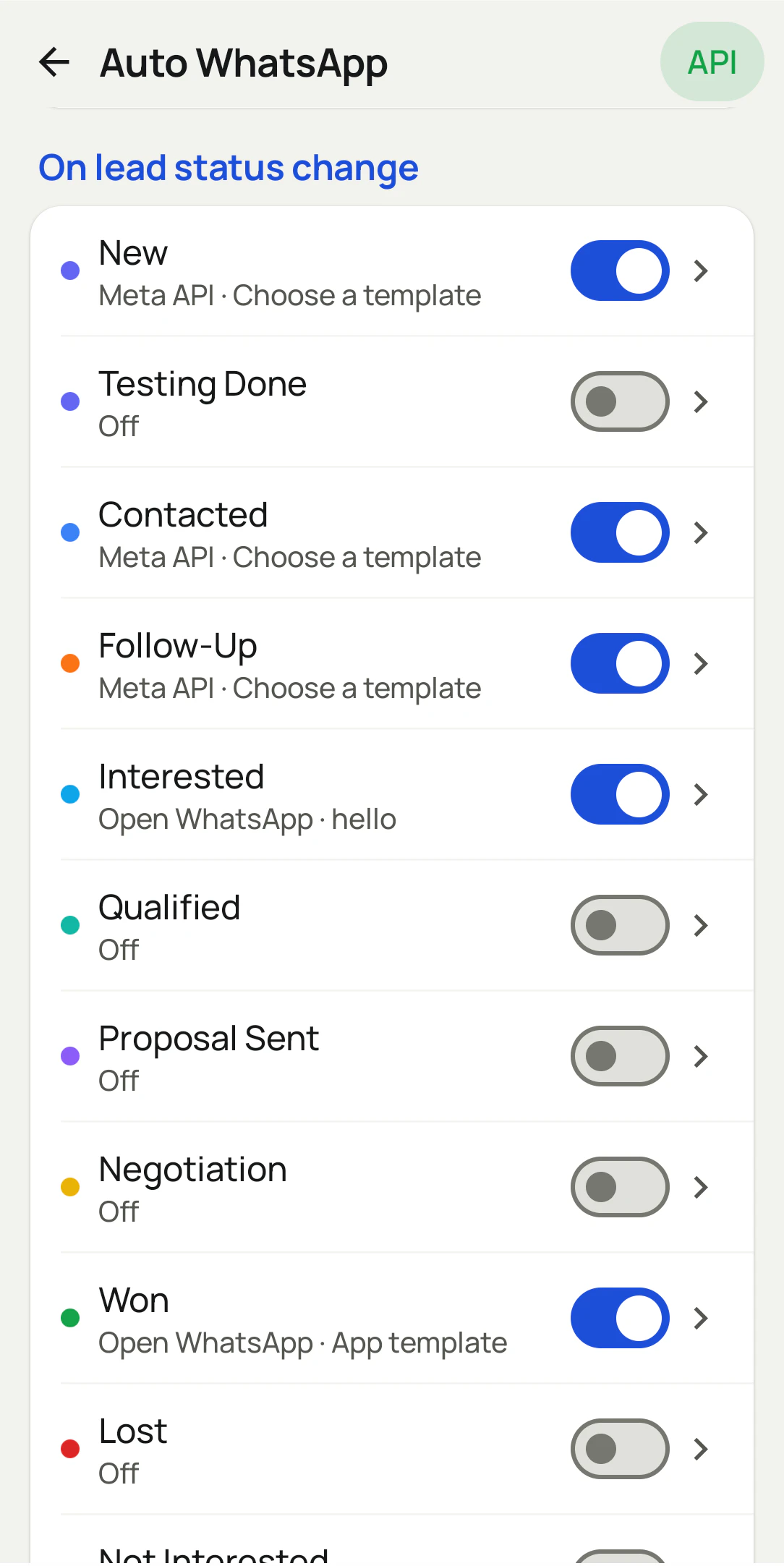
Clients care whose name they trust, not who wrote the code.
Short answer
To use a CRM inside your own business, a no-code or AI app builder is the fastest route. To sell a CRM app under your own brand, white label is the fastest: RMDialer publishes the finished calling CRM under your name on Google Play and the Web CRM, and you shape stages, fields and automatic messages without code while the platform team maintains it.
Key takeaways
Four ways to your own CRM
Each route produces something called your own CRM app. They differ in how long it takes, who maintains it afterwards and whether it can do what a sales team does all day: make calls from a phone.
| Route | Time to something dependable | Who maintains it | On the phone | Fits |
|---|---|---|---|---|
| Code it with a developer team | 6 to 18 months before it is dependable | Your team, forever: servers, Android updates, bugs | Whatever you build; calling logs are hard | A truly unusual workflow and a budget for a tech team |
| No-code app builder | Weeks to a first version | You maintain every screen and rule | Web app or wrapped web app; no call log | Internal tools with forms and tables |
| AI app builder | Days to a demo, longer to something reliable | You own the generated code and its bugs | Usually web; phone calling is rarely handled | Prototypes and one-off internal apps |
| White label calling CRM (RMDialer) | As long as your brand and store listing take | The platform team | Native Android app with SIM calling and call logs | Selling a CRM to phone-led sales teams under your brand |
The table hides one cost that matters most: the second year. A CRM built in-house or generated by a tool needs someone to answer when Android changes how call logs can be read, when a client’s phone model misbehaves or when a server fills up at midnight. Software that works on launch day and then slowly breaks is how many home-grown CRM products end, usually taking their first clients’ trust with them.
A founder near Technopark
Picture a founder in Thiruvananthapuram who ran sales for a travel company and saw every tour operator in Kerala struggling to follow up enquiries. The plan was to build a CRM app for tour operators and houseboat owners, and sell it across the state.
A freelance team built a web CRM in four months. Then the operators asked for the thing they actually needed: an app that rings the customer, logs the call and reminds them to call back before the season fills. Eight months of Android work later, call logging still failed on several phone brands, and the first clients had drifted back to WhatsApp and diaries.
The founder switched to a white label calling CRM under the same brand name, kept the stages and templates designed for tour operators, and spent the next season selling instead of fixing. The founder and the company are an illustration of the pattern, not a named partner.
Making it yours without code
White label does not mean one-size-fits-all. These are the things partners shape for their own market, all without writing a line of code:
App name, icon, colours and store listing on your account; your name on the Web CRM your clients log into.
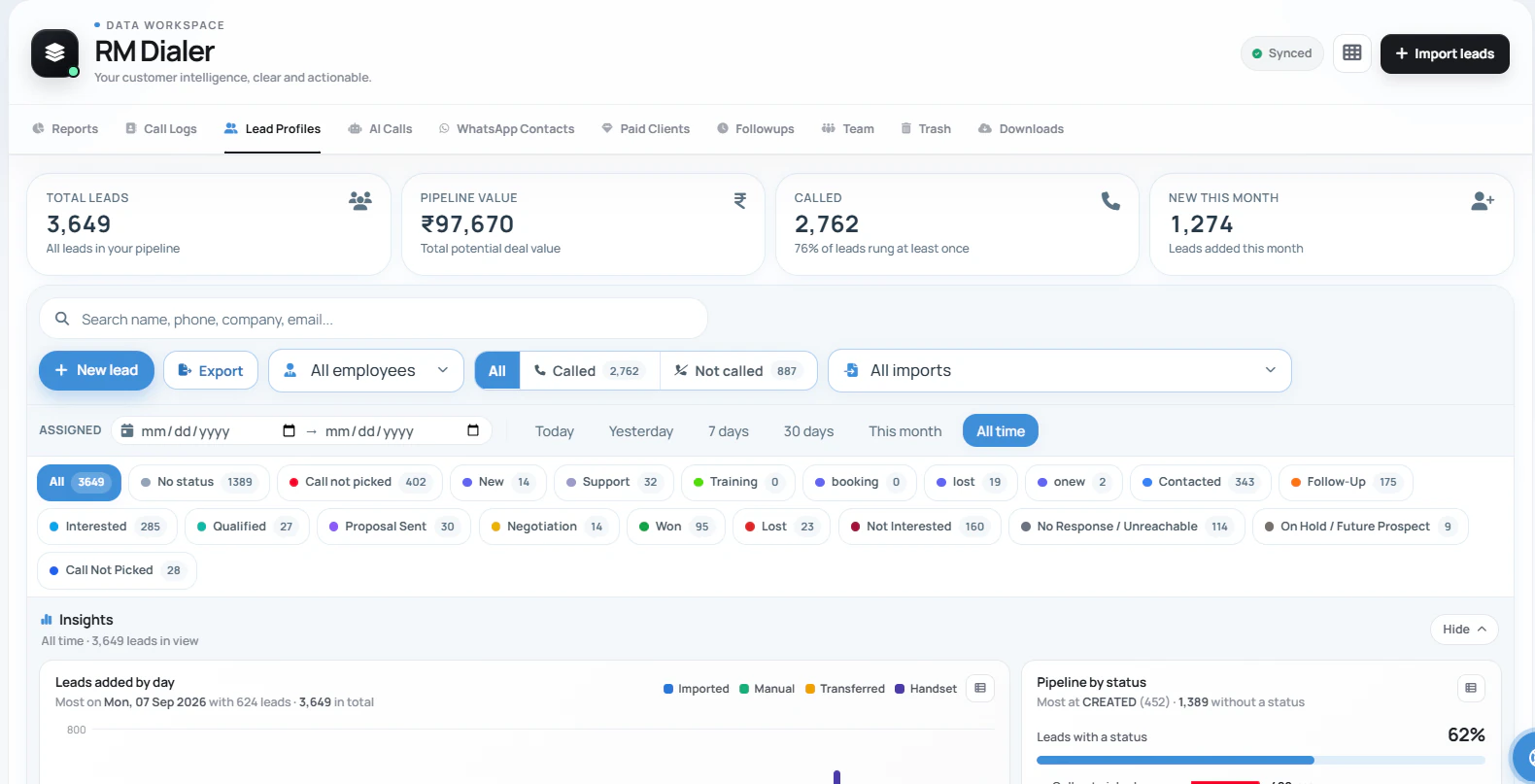
Lead statuses renamed, reordered and added, so a tour operator sees Enquiry and Booked while a builder sees Site visit.
A WhatsApp template for each stage, sent when a lead moves, set by you for each kind of client.
Custom lead fields for the details your market cares about, and lead sources from sheets, forms and portals.
How the kinds of white label CRM compare is covered on white label CRM, and a checklist for choosing one is on best white label CRM.
Try it with your own workflow
Tell us the market you want to sell to and the name you have in mind. We reply with white label terms and a demo you can shape with your own stages and messages.
Team features, one plan
₹159/user/month
₹1,908 per user, billed yearly, plus taxes.
The personal dialer, call log and personal analytics are free forever. Team access and saved lead workflows require a plan. SIM charges and any WhatsApp provider charges are separate.
Compare free and paid features →Choose a route: code it with developers, assemble it in a no-code builder, generate it with an AI app builder, or brand a finished CRM through a white label programme. The right route depends on whether you want to own code or own a brand and customers.
Yes. No-code and AI builders can produce a CRM with forms, tables and pipelines. What they rarely produce is a dependable mobile app that dials, logs calls and works on budget phones; that part takes serious engineering.
A custom CRM with a proper mobile app usually means a team of developers for many months, then ongoing costs for servers, updates and fixes. A white label CRM replaces that with a platform fee, which is why most people selling a CRM choose it.
Yes, through white label. Your name and logo go on the Android app, published on your own Google Play account, and on the Web CRM. The platform team keeps the software running while you sell and support clients.
You can shape it without code: rename and reorder lead stages, set automatic WhatsApp messages per stage, add custom lead fields and choose lead sources. You cannot change the source code, which is also what keeps it maintained for you.
Large platforms are powerful for companies with admins who can configure them. If you are building a CRM to sell to small phone-led teams, they are often too heavy and too desk-bound, which is exactly the gap a mobile calling CRM fills.
Because the phone is involved. Reading call logs, dialing from the SIM, handling dual SIMs, surviving Android’s yearly permission changes and running on cheap phones with weak data are problems a web form builder never has to solve.
It can make a useful first version for internal use, especially forms and dashboards. For a product you sell to many businesses, you then own the generated code, its security and its bugs, which is a software company’s job.
You do. Clients buy from you, see your brand and pay you. The platform behind you provides and maintains the software; the relationship and the pricing are yours.
When your workflow is truly unusual, the CRM is the core of your own business rather than a product you sell, and you can fund a technical team for years. For most people who want to sell a CRM, branding a finished one is faster and safer.
Mostly the time to prepare your brand name, logo, colours and a Google Play developer account in your name. The software is already built and running under other partners’ brands.