Opted-in lists only
Customers who enquired, bought or agreed to messages. Purchased lists and scraped group numbers are how numbers get reported.
NewRMDialer is now on iPhone as well as Android · every feature except the call log
White label WhatsApp CRM
There are hundreds of WhatsApp tools a partner could rebrand, and most of them do the same thing: an inbox and a broadcast button. The client’s sales team still has to leave the tool to phone the customer. RMDialer puts WhatsApp and the dialer in one app, under your name.
Free personal dialer. Paid features include a 3-day trial; no card required.
Team plans: ₹159/user/month, billed yearly + taxes →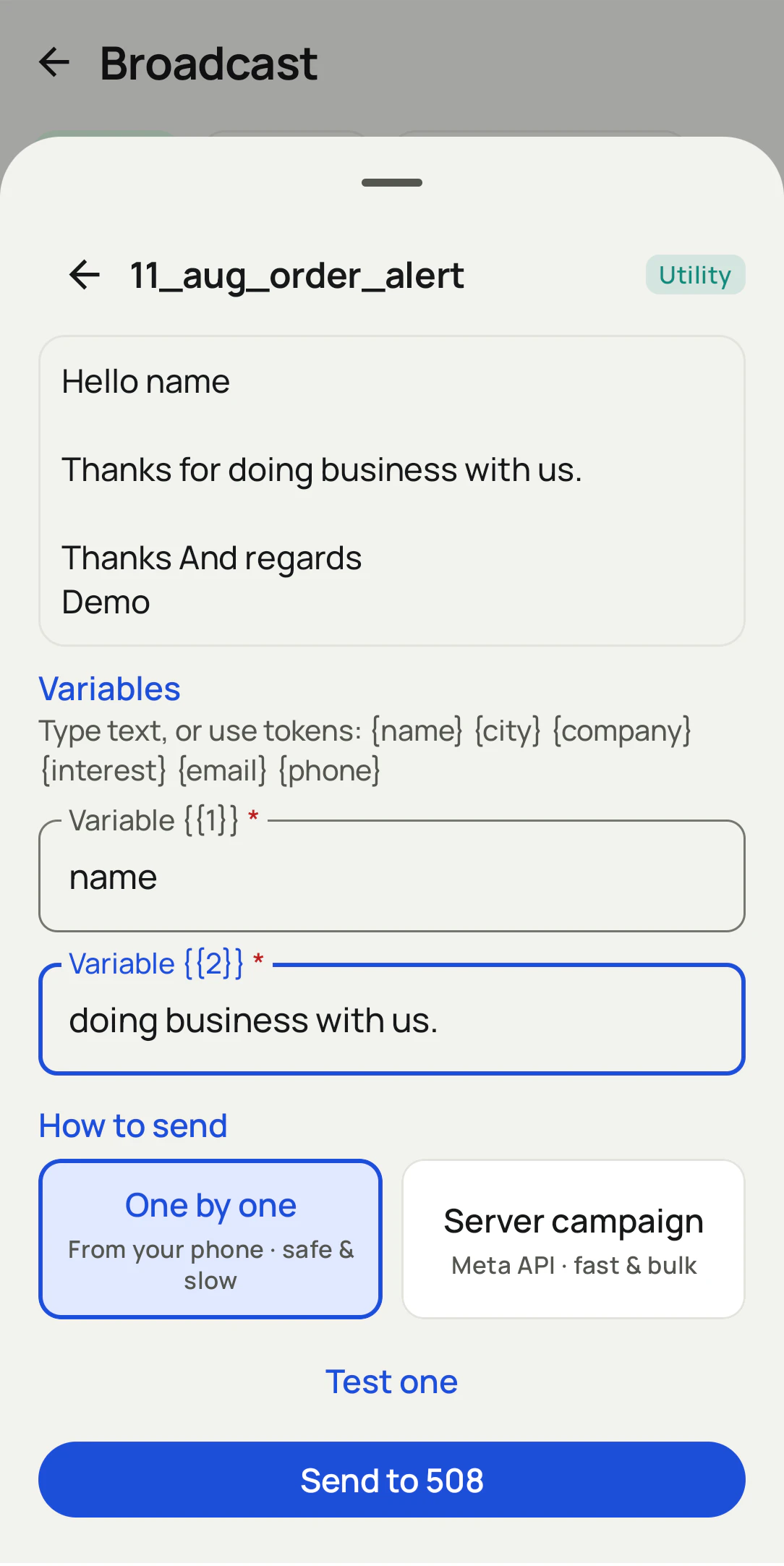
Few can also ring the person who replied.
Short answer
A white label WhatsApp CRM should include a shared inbox, chat-to-lead, approved templates, bulk campaigns, automatic messages after events and contact segments, all under the partner’s brand. RMDialer adds what WhatsApp-only tools lack: a dialer that calls from the salesperson’s own SIM and logs the call on the same lead as the chat.
Key takeaways
Seven WhatsApp pieces
Each piece below is in the branded app. The right-hand column shows what a typical WhatsApp-only tool offers for the same job, which is where your sales conversation will focus.
| Piece | What your client does with it | WhatsApp-only tools |
|---|---|---|
| Shared inbox | Unread and Needs reply counts on one business number | Usually included |
| Chat to lead | Make lead turns a chat into a lead with an owner and status | Tags, but rarely a sales record |
| Call from the chat | Ring the customer from the salesperson’s own SIM, logged on the same lead | Not included |
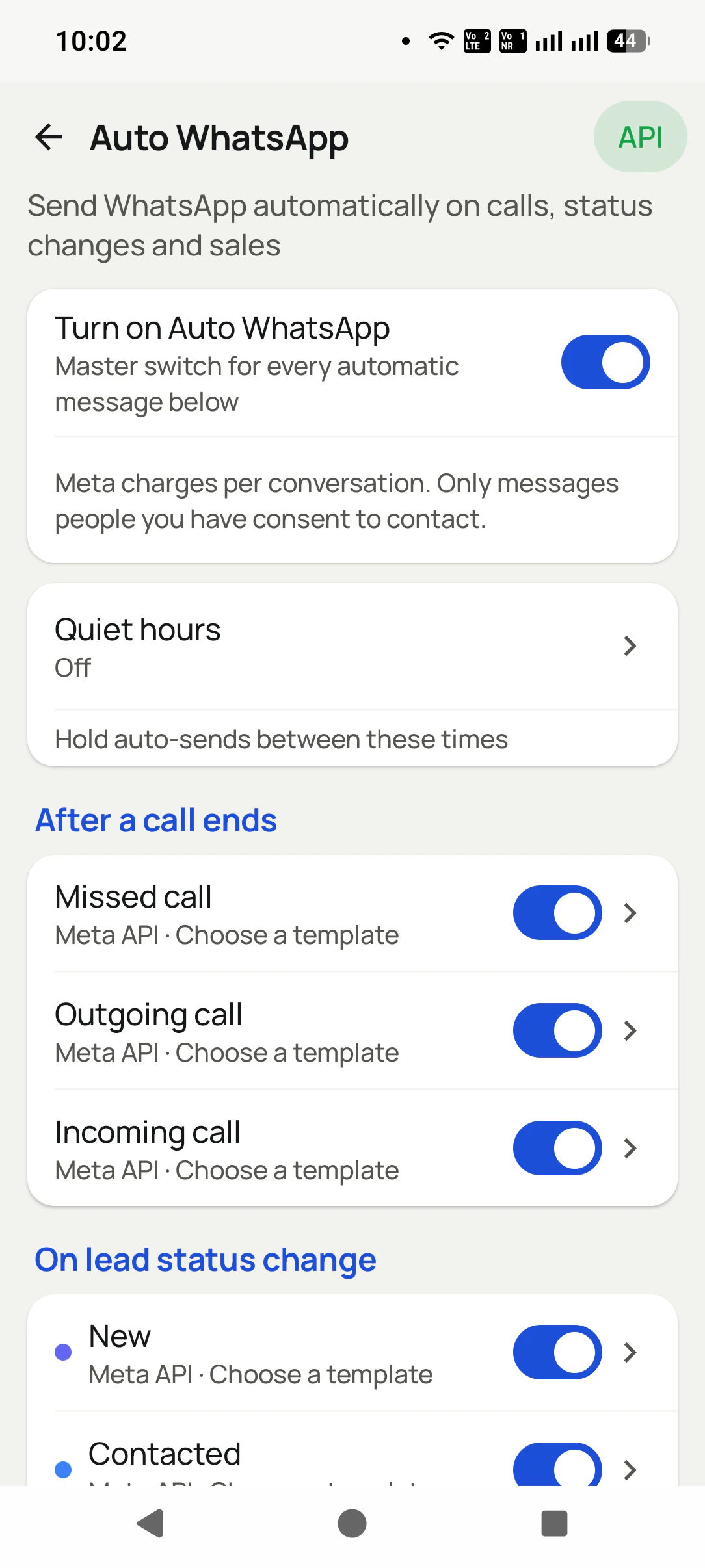
| Messages after calls | A template after a missed, outgoing or incoming call, or a status change | Only on chat events |
| Bulk broadcasts | One by one from the phone, or a server campaign over the Meta API | Usually the main feature |
| Follow-up series | Timed messages that stop when the customer replies or a call connects | Drip flows, without the call signal |
| Segments | Tags and fields to filter who receives a broadcast | Usually included |
A bulk SMS reseller in Aurangabad
Picture a company in Chhatrapati Sambhajinagar that has sold bulk SMS to schools, hospitals, auto dealers and coaching classes for ten years. Every year its clients sent fewer SMS and asked more often about WhatsApp.
Rather than lose them to a WhatsApp tool from another city, the company launched a WhatsApp CRM under its own name. Its clients connected their own WhatsApp API numbers, and the company helped each one get templates approved. The auto dealers were the surprise: they used the dialer more than the broadcasts, calling everyone who replied to a service reminder.
The company still sells SMS for OTPs and alerts, but its monthly revenue now comes mostly from the CRM. It is an illustration of the model, not a named partner.
Protect your clients’ numbers
A blocked number is the fastest way to lose a WhatsApp client, and it is almost always caused by how the client sends, not by the software. Set these four rules in your onboarding call:
Customers who enquired, bought or agreed to messages. Purchased lists and scraped group numbers are how numbers get reported.
A new API number should begin with a few hundred messages a day and grow as Meta raises its limit, not blast thousands on day one.
If a broadcast gets many blocks, stop and rewrite it. Meta judges each number on how people react to its messages.
Automatic messages late at night annoy people into blocking. Quiet hours hold them until morning.
If your business is reselling WhatsApp software under the RMDialer name rather than your own, see WhatsApp CRM reseller. The broader choice of white label options is on white label CRM.
Two bills, kept apart
Your client will pay two different bills, and mixing them up is the most common cause of disputes in the first quarter. One is your subscription for the software, which you set. The other is WhatsApp’s own charge for conversations, which Meta or the client’s provider sets and which rises and falls with how much the client sends.
Keep them apart in your proposal. Price the CRM per user per month, the way clients already think about software, and state plainly that WhatsApp conversation charges are billed by Meta or the provider. A client who runs a big festival campaign then sees a larger WhatsApp bill without feeling that your price changed.
If you are also a WhatsApp provider, you can still bundle the two on one invoice, but show them as separate lines. Clients compare WhatsApp rates across providers every year, and a bundled number hides a comparison they will make anyway.
Your CRM price per user per month or year.
Meta or provider conversation charges, at cost or your provider rate.
Optional: template approval help and training, charged once.
Try it with your own workflow
Say which clients you sell to and whether they already have WhatsApp API numbers. Terms and a demo with a connected test number follow on WhatsApp.
Team features, one plan
₹159/user/month
₹1,908 per user, billed yearly, plus taxes.
The personal dialer, call log and personal analytics are free forever. Team access and saved lead workflows require a plan. SIM charges and any WhatsApp provider charges are separate.
Compare free and paid features →WhatsApp CRM software that a partner sells under their own name and logo. Clients use it to answer WhatsApp enquiries as a team, turn chats into leads and send approved templates, and they only ever see the partner’s brand.
No. A WhatsApp API reseller sells access to WhatsApp’s Business API itself. A white label WhatsApp CRM is the software on top. With RMDialer, clients connect their own API number from Meta directly or from any provider, and the CRM works with it.
Yes. The app keeps provider profiles, so a client can connect Meta directly or a WhatsApp provider they already pay, and switch later without changing CRM. If you are a WhatsApp provider yourself, your clients can connect your service.
Yes. Broadcasts go either one by one from the phone, which is slower and suits small lists, or as a server campaign over the client’s Meta API number, which is fast and suits large, opted-in lists.
The client, to Meta or their WhatsApp provider, per conversation, exactly as with any WhatsApp API software. The CRM subscription you sell is separate from those WhatsApp charges.
The shared inbox, templates and server campaigns need a WhatsApp Business API number. Clients still on the ordinary WhatsApp Business app can use calling, leads and one-by-one sends from the phone, and move to the API when they are ready.
Partners get the full app, so your clients receive WhatsApp, calling, leads and reports together. Many partners find that is the selling point: WhatsApp-only tools are common, one that also rings the customer is not.
Yes. Auto WhatsApp sends a chosen template after a missed, outgoing or incoming call and when a lead’s status changes, with quiet hours so nothing goes out at night.
Teach them to message only people who opted in, use approved templates, start broadcasts small and watch replies and blocks. Meta rates each number on quality, and a client who blasts cold lists will lose the number regardless of software.
As long as Meta takes to verify the business and approve its first templates, which varies from a day to a couple of weeks. The CRM side is ready once the API number is connected, so plan onboarding around template approval.
The client’s own business name and number, because messages come from their own WhatsApp Business account. Your brand appears on the app and the Web CRM the client’s team uses, not in the customer’s chat.